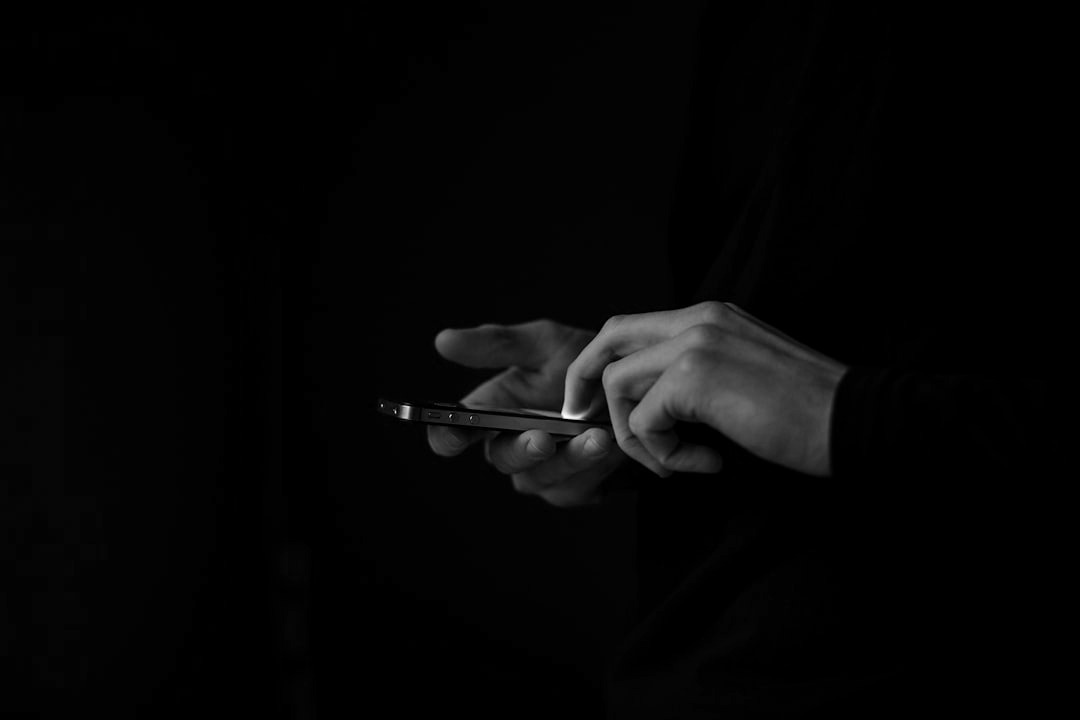
Pascal would have thrown away his iPhone
+ My new app just launched...

You’re standing in a grocery store line. You’re waiting for a flight. You’re stuck in the passenger seat on a long drive. You reach into your pocket and find it empty. Somehow, your smartphone is gone. For a few seconds, your brain short-circuits.
What do you do with your hands?
Where do you look?
How do you survive three to five minutes of unstructured nothingness?
If you’re like most of the modern world, you’ll do almost anything to avoid this feeling. You’ll doomscroll through outrage, swipe through strangers’ curated vacations, read the Wikipedia entry for the Lesser Antilles, watch actual footage of a school shooting or a gruesome murder, or play a mindless matching game, all to dodge the existential terror of standing still with your own thoughts.
More than three hundred and fifty years ago, a sickly, brilliant French mathematician, physicist, and theologian named Blaise Pascal diagnosed our present condition. He had no iPhone, no algorithm, no social media feed. He didn’t even have electricity. But he understood the human psyche so well that he wrote a sentence that indicts our digital lives:
“All of humanity’s problems stem from man’s inability to sit quietly in a room alone.”
If Blaise Pascal were alive today, he’d look at our glowing rectangles, our phantom vibrations, our infinite scrolls, and shudder.
Then - almost certainly - he’d throw away his phone.
A 17th-Century Diagnosis of a 21st-Century Disease
Pascal was a prodigy. By 16, he’d written a treatise on conic sections that left Descartes bewildered. He invented the mechanical calculator, pioneered probability theory, and made foundational contributions to fluid mechanics.
…But in his late twenties, after a profound mystical experience, he abandoned his scientific work to give his life to philosophy and theology.
He set out to write a massive defense of the Christian faith, a collection of notes and fragments published after his death as the Pensées (Thoughts). In it, Pascal dissected the human condition with surgical precision. He believed human beings live in a state of paradox, caught between the infinite and the infinitesimal. We can grasp the vastness of the universe and the microscopic nature of the atom, yet we’re fragile, mortal, and doomed to decay.
This realization, Pascal argued, produces a fundamental dread. When we stop moving, when the noise fades, when we confront our own mortality and smallness, we feel a terrifying emptiness. Pascal called this ennui, a soul-crushing boredom and anxiety that grows out of awareness of our wretched state.
To escape the dread, we invented what Pascal called divertissement, or diversion. Diversion is more than having fun. It’s a psychological defense mechanism, the frantic human attempt to avoid facing the void.
“We run carelessly to the precipice, after we have put something before us to prevent us seeing it,” Pascal wrote.
The smartphone is the ultimate precipice-blocker, a pocket-sized diversion engine engineered to anesthetize the ennui. Pascal argued that humans don’t actually want the things they chase; they want the chase itself. Give a man everything he desires - wealth, power, leisure - and he turns miserable, because you’ve stripped him of the distraction of the hunt.
Look at our apps.
Look at your apps.
The designers of TikTok, Instagram, and Twitter never actually give us what we desire; they give us the hunt. The variable reward of the infinite scroll, the unpredictable funny video, the validating like, the infuriating headline, is a digitized version of Pascal’s rabbit hunt.
Distraction, Designed
Pascal would see the modern smartphone exactly as it is: a weapon of mass psychological destruction. The tech industry has weaponized his understanding of divertissement.
Before the digital age, diversion took effort. You went to a play, hosted a dinner, went hunting, read a book. Solitude was the default, and diversion was the exception. Today that’s inverted. Distraction is the default, and solitude is the exception you have to fight for.
Pascal warned that diversion is the greatest of our miseries because it leads us away from ourselves.
“Diversion amuses us, and leads us unconsciously to death.”
Our phones lead us unconsciously through our days, our weeks, our years, our whole lives. We check our screens before we look at the ceiling. We eat with a video playing. We cross the street with our eyes on a slab of glowing glass. We fall asleep scrolling through strangers’ thoughts. The phone guarantees that the room Pascal described is never empty. Even alone, we fill it with millions of simulated presences.
Pascal believed that wisdom, peace, and connection with the divine could come only from facing the void - from staying in the room and sitting with the silence until it turned familiar and something deeper could be heard. The smartphone makes that confrontation impossible. It floods the silence with noise, so we never have to meet our own souls.
The Death of Deep Thought and the Pensées
Could Pascal write the Pensées today?
If he was anything like us - like you and very specifically me - almost certainly not.
The smartphone is the enemy of deep thought. Deep thinking needs sustained attention, incubation, and boredom. Boredom is the soil where creativity grows. An unstimulated mind starts to ruminate, to connect general ideas, to wander, and that wandering is what produces genius.
But our phones have killed boredom. We fill every micro-moment of possible incubation with a micro-dose of dopamine. We check the phone while the kettle boils, while the elevator descends, while the computer boots, while the kid cries, while the coffee gets made. We’ve outsourced our inner monologue to the algorithm.
Pascal would mourn what this does to the mind.
We’re brilliant at accessing information, with the sum of human knowledge in our pockets, but we’ve lost the ability to turn it into wisdom.
Because wisdom - well, it needs friction. It needs the struggle of staying with a problem, feeling the discomfort of not knowing, and letting the subconscious work. The smartphone hands us an endless buffet of pre-digested answers, opinions, and outrage, and skips the struggle entirely.
Pascal despised the ego.
He wrote at length about human vanity, our hunger to be seen, our obsession with status, our willingness to conform to the crowd. “The omnipotence of kings,” he wrote, “is not an omnipotence of command, but an omnipotence of fascination.” Social media has handed that omnipotence of fascination to everyone. We’re all kings and queens now, curating our digital kingdoms, hoping to fascinate our subjects, terrified of being ignored.
The smartphone feeds this vanity without pause, making us prisoners of our own self-image.
Illusion, Connection and our Fear of the Void
A human connection (and no - LinkedIn doesn’t actually count) asks us to be fully there, in the room, with the other person. But the smartphone interrupts presence. It creates a low-level anxiety that someone somewhere is saying something more interesting, that we’re missing a better reality. Phubbing, snubbing the person in front of you to look at your phone, violates Pascal’s ethic of presence directly.
Worse, our digital connections let us over-curate who we deal with.
We block, mute, and unfollow anyone who challenges us. We settle into echo chambers that flatter the ego on repeat. Pascal believed adversity and disagreement were necessary to humble the human spirit. The friction of real relationships forces us to face our own flaws. The smartphone lets us skip that friction, and it raises a generation of fragile egos wrapped in algorithmic bubble wrap.
In one fragment, he described the dread of looking up at the night sky and contemplating a vast, cold, indifferent universe. The smartphone is our shield against those infinite spaces. We pull it out when the night sky feels too big, when the silence feels too heavy, when our own smallness becomes too obvious. We drown the eternal silence in push notifications, podcasts, and playlists.
But Pascal didn’t want us to hide from the infinite. He wanted us to face it. He believed that only by staring into the void could we recognize our need for something greater than ourselves. Only by staying alone in the room could we find God, or at least the truth of our own existence. By deleting his phone, Pascal wouldn’t reject technology; he’d reclaim his soul.
What Would Pascal’s Digital Minimalism Look Like?
He’d start by stripping out the frictionless diversions. No social media, no infinite feeds, no games. The variable reward systems are the architectural enemy of the human soul. He’d turn the smartphone into a dumb phone or use something like the Light Phone, which allows only calls, maps, and directions. He’d treat the device as a tool, much like his mechanical calculator, the Pascaline: use it to solve a specific problem, then put it away.
Then he’d put friction back into his life.
He’d take long walks without earbuds.
He’d practice doing nothing, waiting in line, sitting in traffic, boiling water, without reaching for a screen.
He’d preach the gospel of the empty room.
He’d tell us the withdrawal we feel when we put the phone down, the phantom vibrations, the itching fingers, the spike of anxiety, aren’t actually signs that we need our phones; they’re the ennui surfacing. They’re the accumulated dread we’ve dodged for years, finally demanding to be felt.
The Wager We Keep Making
Pascal is best known for his Wager, the argument that every human bets their life on whether God exists. He held that a rational person should live as though God exists, since there’s everything to gain and nothing to lose.
We’re making a similar wager with our attention. We’re betting we can hand our minds to the algorithm, live in constant distraction, and still keep our humanity, our agency, our capacity for joy.
Pascal would look at that bet and call us fools. We’re staking our infinite, irreplaceable capacity for deep thought, genuine love, and spiritual peace on the finite, fleeting pleasure of the dopamine hit. And we’re losing.
Reclaiming the Room
It’s easy to romanticize the past and demonize technology. The smartphone is a marvel, and I’m far from a luddite, no matter how you interpret the label. But Pascal’s warning targets human nature, not technology. The phone is only the latest and most powerful version of an ancient flight from ourselves.
“All of humanity’s problems stem from man’s inability to sit quietly in a room alone.”
Think about your screen time; the hours you spent this week running toward the precipice with your phone held up in front of your eyes. How many of those hours have been sacrificed to avoid being entirely alone for 5 minutes?
Pascal would throw away his phone because he understood that the most important journey a person can take is the one inward. He knew the hardest and most rewarding thing you can do is face the silence.
You don’t have to go into isolation to take the warning seriously. But you do have to learn to put it down. You have to learn to be in the room without a screen, without noise, without diversion, and simply exist. Let the ennui wash over you until it breaks, and you find that on the other side of the boredom is the truth of who you actually are.
Pascal would tell you that the void is not an enemy to be escaped. It’s a mirror. And if you’re brave enough to look into it, you’ll find everything you’ve been searching for on your screen.
Put the phone in another room.
Close the door.
Sit down.
Be still.
Kerouac is live.
The studio for pro bloggers.
I built the tool I always wanted for my own writing, and now it’s yours too!
Kerouac is one home for everything you write. Every post you’ve shipped, every idea you haven’t yet, and the whole pipeline in between.
Here’s what it does:
Syncs everywhere you publish. Connect Substack, Ghost, Medium, and your own blog. Kerouac pulls in everything automatically. No copy-pasting, no manual logging.
Helps you turn ideas into finished pieces. Save an idea the moment it lands, drop it onto a Kanban board built for writers, and draft it in a distraction-free editor that colors every word by part of speech, so weak verbs and lazy adverbs surface instantly. No AI, no autocomplete, no machine writing your sentences for you. The words are yours.
Shows the world your work. A GitHub-style activity graph tracks your streak and a year of writing at a glance. A public profile pulls your latest posts from every platform into a single link you can put in your bio.
Runs your blog like a pipeline. Move each piece from raw idea through drafting, editing, and scheduling to published. Nothing you meant to write slips through the cracks.
Start with 30 days free (no card), then $8/month or $60/year.
And to celebrate launch: use code:
FIRSTYEAR50
for 50% off your first year; $30 instead of $60
Come build a serious blog with me.
You can find me on Kerouac here: https://www.kerouacapp.com/u/joan
JA Westenberg


Thank you for this beautifully written and well-presented piece. More on Pascal please !