
Eternal Recurrence as a Design Test
WWND: What Would Nietzsche Do
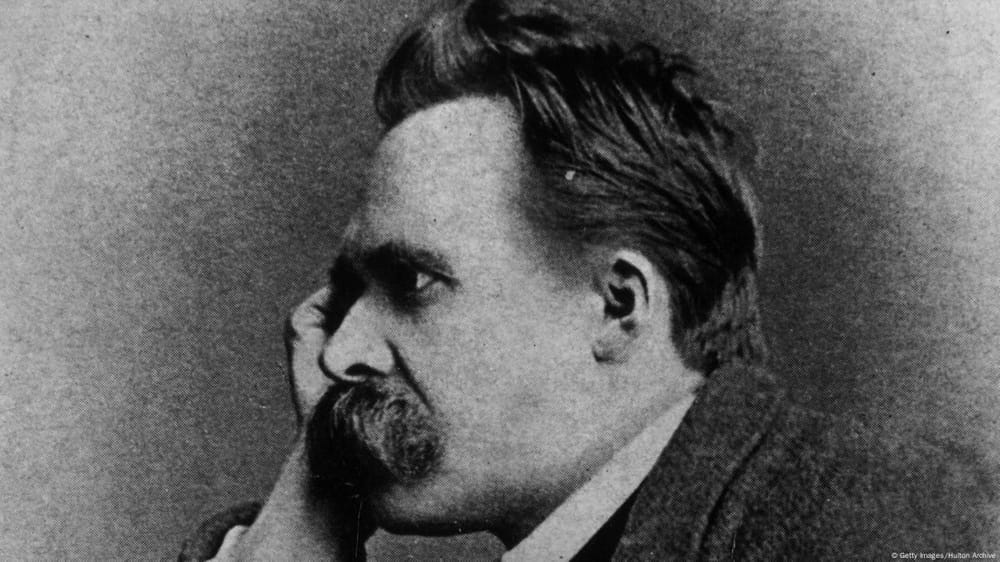
"What if a demon were to steal after you into your loneliest loneliness... and say: This life as you now live it and have lived it, you will have to live once more and innumerable times more... Would you not throw yourself down and gnash your teeth and curse the demon who spoke thus? Or have you once experienced a tremendous moment when you would have answered him: You are a god, and never have I heard anything more divine."
Friedrich Nietzsche, The Gay Science
What If You Had to Run This Business Forever?
Nietzsche's idea of the eternal recurrence is not a productivity framework. It doesn't belong in a slide deck or a self-help book. It's a metaphysical provocation, a pressure test for the soul. But take it out of its native habitat and run it across the grain of the builder, and it gives us something else: a harsh // clarifying lens on design, intention, and endurance.
What if you had to run your company again and again, endlessly?
Not grow it. Not exit. Not pivot into something trendier.
What if the loop closed, the future was shut off, and the only thing left was the present, repeating itself without relief?
It’s a version of a question startup founders often get wrong, or answer in bad faith.
"Would you do this if you knew it wouldn’t scale?"
"Would you work on this even if no one noticed?"
These sound noble, but they’re half-formed. Eternal recurrence doesn’t ask whether the idea is worth starting. It asks whether the idea is worth being trapped inside. Is your business designed for escape velocity - or for recurrence?
The Inversion of Modern Startup Logic
We keep building to move fast and break things.
Nietzsche asks whether you'd be content to live inside what you've broken. Silicon Valley lionizes the pivot; eternal recurrence makes the pivot feel like a panic. Founders design for growth, for scale, for future prestige, future acquisition, future gratitude. Eternal recurrence erases all of that. There is no future: just the next repetition of now.
Suddenly the aggressive growth-hack looks like an architectural flaw. The exploit that juices your week-over-week numbers also turns your infinite repetition into a hellscape. The ad you wrote at 2 a.m. to drive engagement becomes your eternal voice.
Are you comfortable hearing yourself pitch this, over and over, into the longest possible hallway of time?
There's a difference between cleverness and coherence. Coherence is repeatable. Cleverness often isn't. Eternal recurrence doesn’t punish failure, it punishes things that are exhausting to live inside.
The IKEA Test
Charlie Munger once said the test of a good business is whether a truly stupid person could run it, because someday a truly stupid person will. Nietzsche's version is more perverse: could you run it, over and over, with no prospect of relief?
You might be a genius.
Can your genius tolerate stasis?
Apply it to IKEA. Their founder, Ingvar Kamprad, built the company to be weirdly eternal. It’s a privately held, non-profit foundation structure that can’t be sold. Their business model is static by design: flat-packed furniture, sprawling warehouses, cafeteria meatballs, modest pricing, high customer tolerance for frustration. The whole ecosystem is built not for thrilling disruption but for quiet re-run.
Now imagine you are condemned to run IKEA, not to re-invent it. Is the idea sound enough, stable enough, to be lived in permanently? Yes, it turns out. There is an elegance to the constraints. It does not collapse under its own weight. Even the cheap particle board has a kind of poetry to it.
Contrast that with a company that only makes sense during a particular window of arbitrage. Take something like MoviePass. For a few years, it offered unlimited movie tickets for a monthly subscription that made no economic sense. The founders pitched scale, brand capture, eventual profitability. It was a race against time: scale before the math caught up.
Now trap them in recurrence. The founders wake each morning to the same customer support queue, the same broken incentive structure, the same hemorrhaging capital. No exit. No pivot. Just the business as it is. Would it survive this test? Could anyone live inside it, forever?
Design for the Loop
Designing something to be livable rather than flippable changes your choices. Suddenly, "move fast" = a bad joke. Instead, you ask: Can I bear the texture of this? Are the relationships I’m building ones I could stand to inhabit on loop?
It sounds sentimental, until you consider how many modern businesses are, in effect, pyramid schemes of escape. The early employees sell their souls for options they hope to convert. The founders sell their story for a shot at acquisition. Everyone wants to exit. No one wants to inhabit.
But recurrence forces you into habitation. So you design accordingly. Incentives are not just clever - they're tolerable. The way meetings run, the way feedback flows, even the aesthetic choices of the product: all of it has to be pleasant enough to endure.
This doesn’t mean safe or boring. Recurrence doesn't punish ambition. It punishes nihilism. An ambitious business that is also coherent, that grows by its own logic rather than by exploiting temporary mismatches, might thrive under recurrence.
The Historical Echo: Monasteries, Not Markets
The Rule of St. Benedict, the foundational guide for Western monastic life, was designed to be livable for decades. Every hour, every task, every meal was scheduled not for efficiency, but for spiritual and psychological sustainability. You were not meant to hack your way out of the monastery. You were meant to shape yourself to it.
The best monastic orders endured because…well, they outlasted everyone else. The repetition became a form of transcendence. Eternal recurrence as discipline.
Some software businesses echo this. Basecamp (now 37signals) famously rejected venture capital, scaled only at a pace they could enjoy living with, and actively pruned features rather than stacking them. It’s a small, weird monastery of software. Not because they fear change, but because they have designed something they are willing to inhabit.
This is not the only viable model.
It’s the one that passes the Nietzsche test.
You do not have to worship recurrence.
But you do have to live with your tools.
What Breaks Under Recurrence?
The modern "builder" ethos encourages you to ship first and fix later. MVPs, sprints, beta tests: these are designed for churn. But recurrence is allergic to churn. If you had to wake up inside this dashboard, this user flow, this onboarding experience, every day for eternity, how long before you start to crack?
Some patterns: businesses that depend on deception - fake urgency, false scarcity, predatory behavioral nudges - collapse fast. Even if they work on others, they corrode the soul of the builder. The eternal recurrence of your own manipulation turns your work into self-sabotage.
Others break more subtly // slowly. A media company built on constant outrage will burn out its founders along with its audience. A business that depends on manufacturing novelty will eventually find that novelty runs dry. Amazon, with all its scale, must reckon with the psychic weight of infinite growth. Internal reports describe warehouse workers feeling like "cogs in a machine." There is no soul here. Only misery. And misery never produced a labour of love.
There is a reason Dante's Inferno organizes hell by structure, not by evil.
Each circle is a loop. The punishment is repetition. The vice becomes a rhythm.
From Exit to Exist
We are dealing here with a question of craftsmanship, not of performance. Can I make this thing so well that I could stand to use it, again and again, with no applause, no growth, no finale? Eternal recurrence removes the end credits. What’s left is the texture of the thing itself.
It's the artisan’s question. It's the monk's question. It’s also the user’s question. Because what users often want is not maximum features or optimal price. They want something that works and keeps working, something they can live inside. That’s what makes recurrence a test of sufficiency, not a punishment. A test, of whether your business is shaped for permanence, or only for exit.
Design for recurrence - because it’s practical. Because if you accidentally succeed, you may trap yourself inside a machine of your own making.
And ask yourself:
What if you had to live here?
What if this was all there ever was?
And would you still build it anyway?