I truly hate mostpeopleslop

In 2006, Joe Sugarman published a book called The Adweek Copywriting Handbook - and an axiom stuck...
"The sole purpose of the first sentence in an advertisement is to get you to read the second sentence."
That line, more or less, explains how social media turned into a pile of shit.
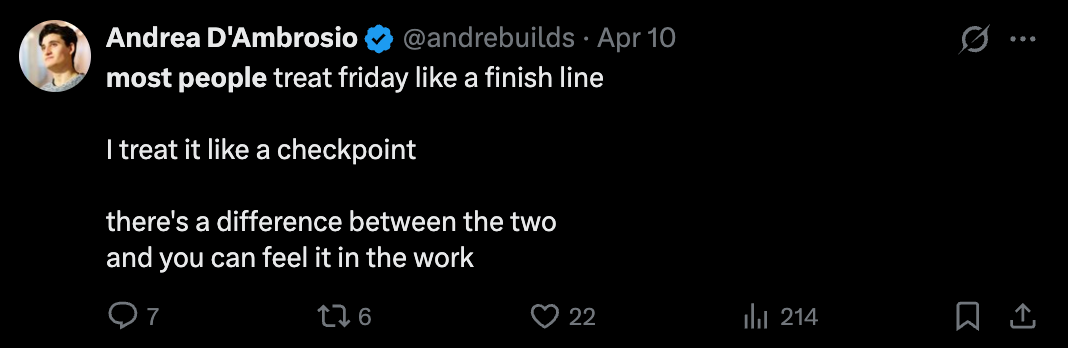
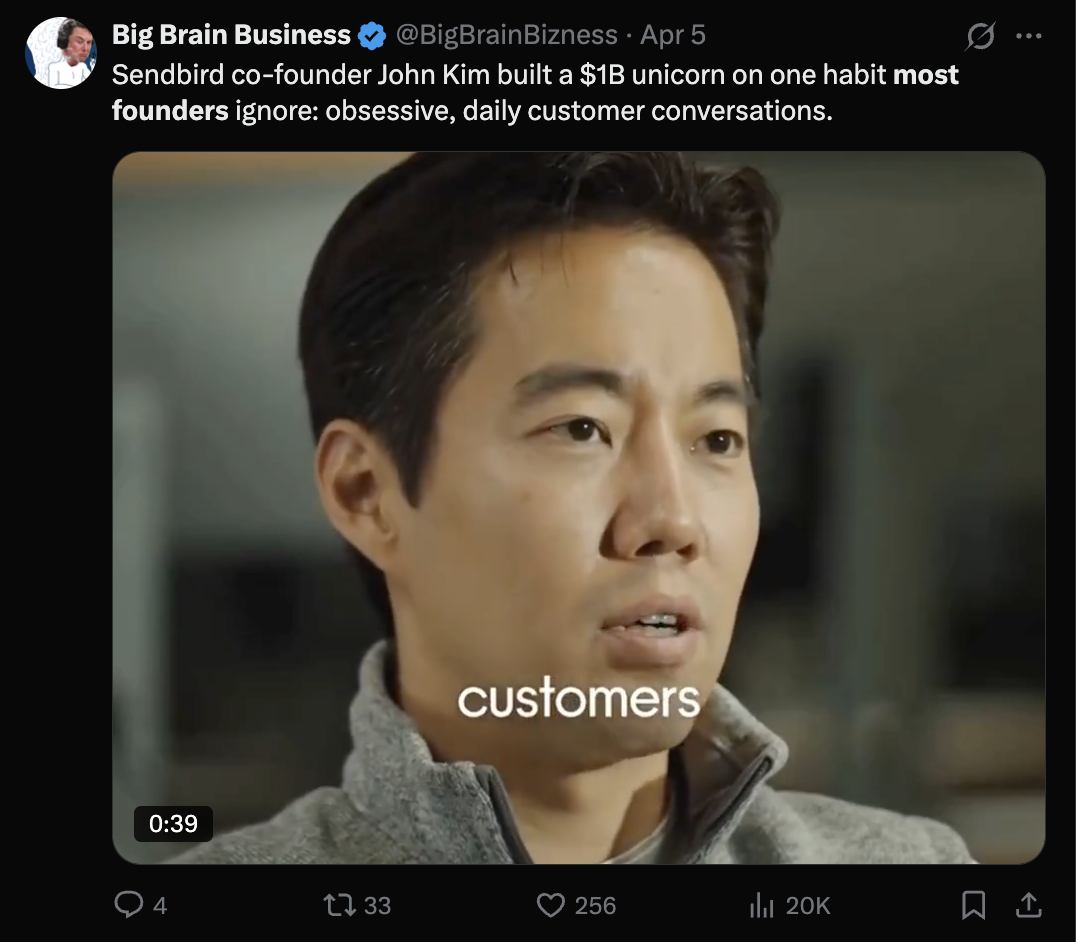
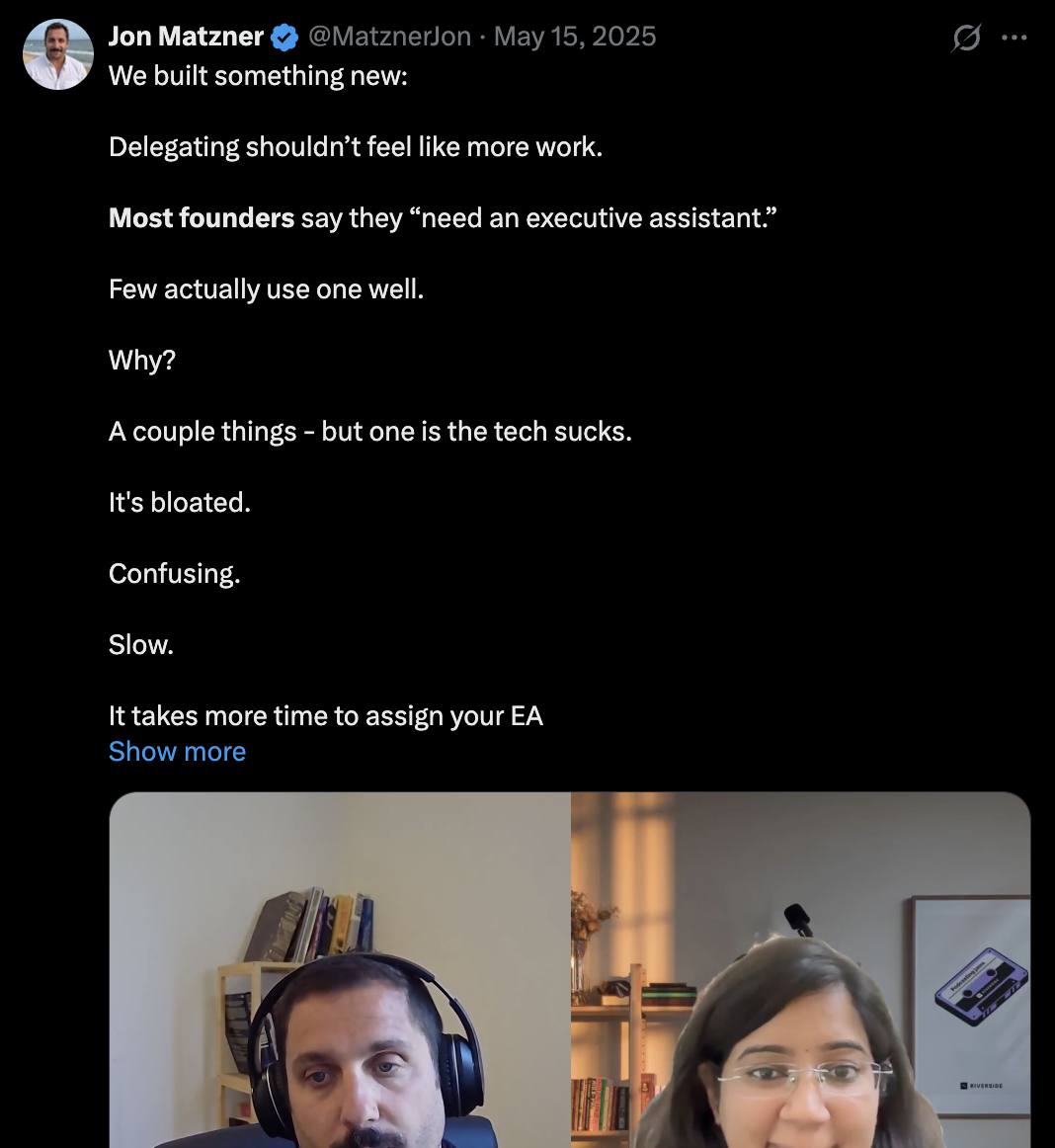
Sugarman's advice became the core system prompt for 300,000 tech assholes on Twitter. They've run it through algorithm after algorithm and produced the most soul destroying rhetorical tic of the 2020s. I'm talking about "Mostpeopleslop." "Most founders don't know this yet." "Most people aren't paying attention to this." "Most founders skip [thing my startup sells] because [bad reason]." "Most founders treat [normal activity] like [wrong version of activity]." "Most founders say they want [thing]. Few actually [thing] well." "Most founders confuse [vague concept A] with [vague concept B]." You've seen it, you've scrolled past it, and you've maybe even liked one or two of these excretions before your brain caught up to your thumb, because it's bloody everywhere. It breeds in the dark spaces between LinkedIn notifications, it has colonized every timeline on every platform where a man with a podcast and a Calendly link can post for free, and I hate it. May God forgive me, I hate it.
Why it works (and why that's the problem)
I'll give the format its due: it works // performs. And the reason why is simple. "Most people" is a tribal signal - when you read "most people don't know about this," your brain does a quick calculation: Am I most people? Do I want to be most people? No? Then I better keep reading, so I can be the Holy Exception. But you're not actually learning fucking anything. You're being told you're special for having stopped to read, and the poster is offering you membership in an in-group, and the price of admission is a like, a retweet, any scrap of engagement. It's a scarcity play - people pay more attention to shit that feels exclusive.
"Most people don't know this" is exactly that.
It comes in a few different flavours...
The Reframe Artist goes "Most people are treating [recent tech acquisition] as a media story. It's a distribution story." This guy read one Ben Thompson article in 2019 and has been repackaging the word "distribution" as a personality trait ever since. The point underneath might even be fine! But he can't say it straight.
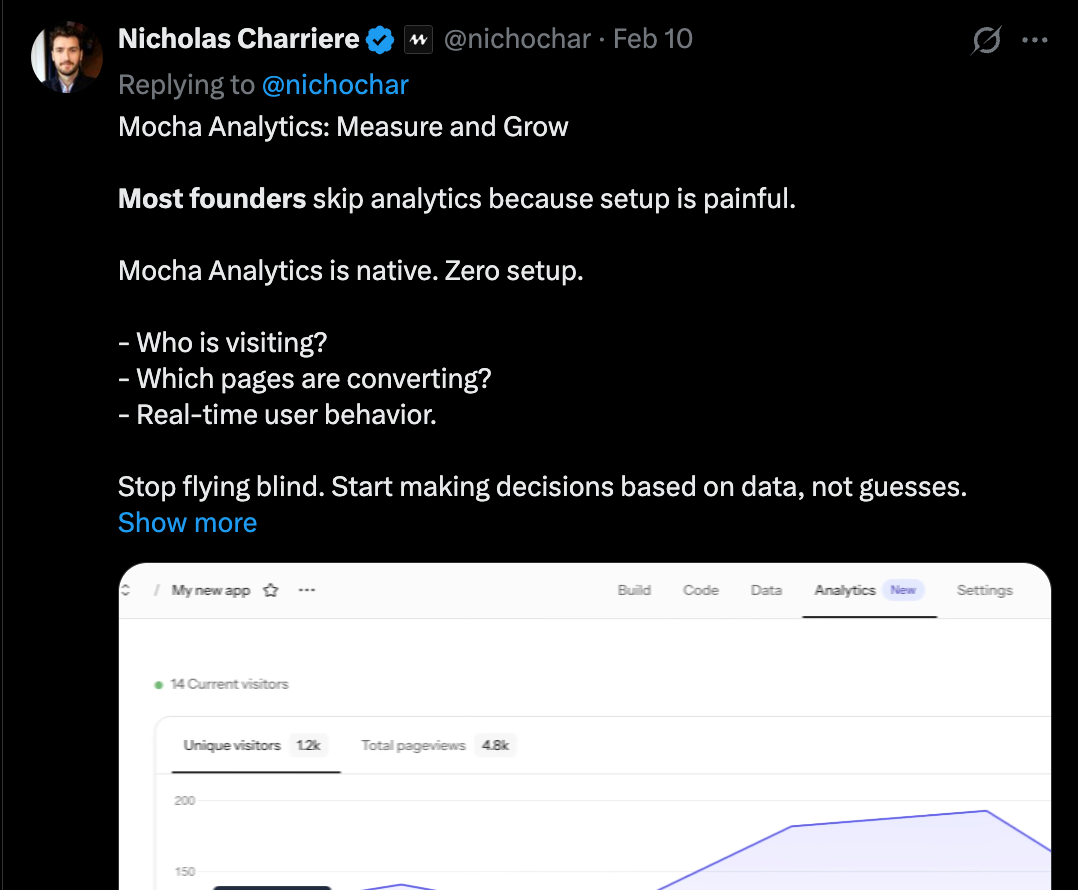
The Trojan Horse is "Most founders skip analytics because setup is painful. [My startup] is native. Zero setup." These are just ads. They are indistinguishable from late-night infomercials. "Are YOU tired of [thing]? Most founders are! But wait, there's more and if you follow and reply CRAP now, you get a set of steak knives..."
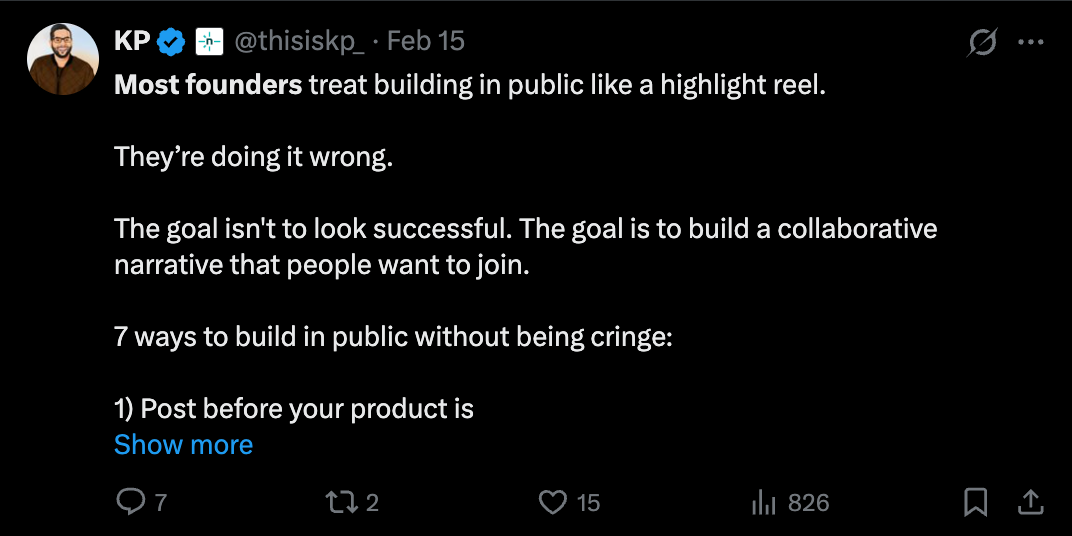
The Self-Eating Snake: "Most founders treat building in public like a highlight reel. They're doing it wrong. 7 ways to build in public without being cringe." Followed by a numbered list that packages a real idea in the same exact format it claims to be critiquing.
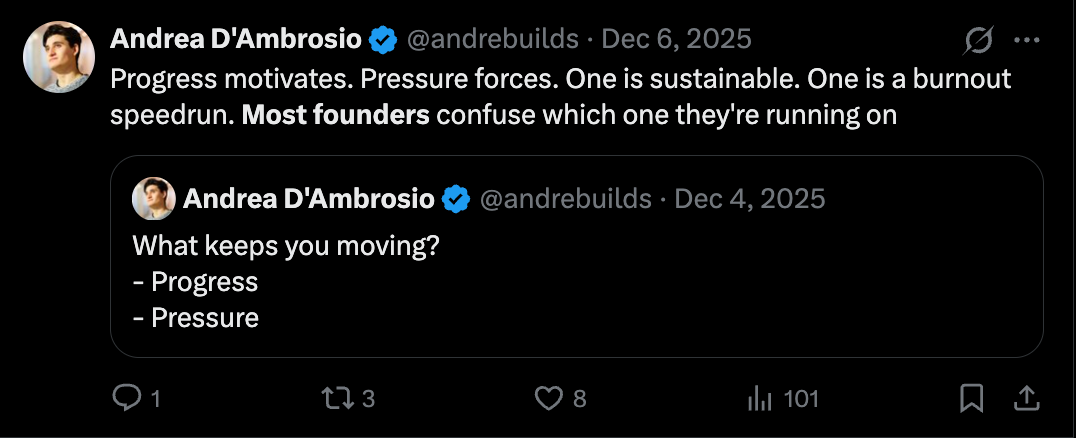
The Fortune Cookie: "Most founders confuse motivation with desperation." "Most founders mistake speed for progress." These sound wise if you scroll past them fast enough. They're fortune cookies, and they get engagement because they're perfect for screenshotting into your Instagram story, but there's nothing actually there...
And the Parasite: some guy quote-tweets "What keeps you moving? Progress or Pressure?" and adds "Most founders confuse which one they're running on." You take someone else's thought, bolt on the "most founders" frame, and now you've "created content." The confidence-to-effort ratio should embarrass anyone. It's intellectual house-flipping, with all the integrity attached.
The content industrial complex
Mostpeopleslop has metastasized because Twitter started rewarding engagement bait at the same time the creator economy started demanding you post all day // every day. If you're a tech influencer in 2026, you probably post 10 to 20 times a day, maybe more - this is what the gurus tell you to do. You need formats you can crank out fast that reliably get impressions, and "most people" threads do exactly that. There's no research required, and no original data - you barely need an opinion. You could generate these in your sleep, and thanks to OpenClaw some of these guys clearly do...
The easiest content to produce is the content that mimics existing successful content. The "most people" format is the shallow work of tech Twitter. It looks like thought leadership. It reads like wisdom. It's still slop.
The result is a timeline full of people telling you what "most people" get wrong, while they all say roughly the same things, in roughly the same format, to the same audience with a near-uniform contrarianism. Everyone is standing on a soapbox yelling "wake up, sheeple" at a crowd of other people on soapboxes.
The aesthetic crime of reading the same tweet structure 40 times a day isn't even the worst part - it's that mostpeopleslop degrades the information environment. When every piece of advice is framed as something "most people" don't know, you lose the ability to distinguish between underappreciated ideas and stuff someone repackaged from a blog post they read that morning...
And it trains audiences to value framing over substance - if you read enough "most people" posts, you start evaluating ideas based on how they're packaged rather than whether they're true. A well-formatted "most people" thread with a mediocre idea will outperform a useful post that doesn't use the formula, and so yes the medium becomes the message, but the message is: style points matter more than being right or even being valuable in the first place.
Everyone is an insider and an outsider at the same time; you're an insider because you're reading this post, you're an outsider because "most people" haven't figured this out yet, but since everyone is reading these posts, everyone is an insider, which means the distinction is fictional and we seem to have a collective hallucination of exclusivity.
The incentive structure on Twitter (and LinkedIn, where this format is somehow even more prevalent) rewards this kind of posting. If you're building an audience to sell a course, a SaaS product, a consulting practice, or a $249/month community where you teach other people to build audiences to sell courses, you need impressions, and you need followers, and mostpeopleslop delivers both. The people posting this stuff aren't stupid; some of them (a select // rare few, I'll grant) are sharp, have real experience, and could write things worth reading, but the format is a trap. Once you see that it performs, you keep using it, and every time you use it, you get a little further from saying something real and a little closer to being a content-generation machine optimized for engagement metrics. You have become the slop.
I want people to say the thing. If you have an observation about distribution, share the observation. If you built a product that solves a problem, describe the problem and describe the solution and have done with it. You don't need to frame every single post as a correction of what "most people" believe, and you don't need to position yourself as the lone voice of reason in a sea of ignorance. You can just ~say the thing.
The best writers and thinkers in tech have never needed the "most people" crutch. You can be interesting without being condescending. You can build an audience by being useful rather than by manufacturing a false sense of exclusivity 280 characters at a time.
But most people don't know that yet. (Sorry. Had to.)