Emotional regulation is a dying art.
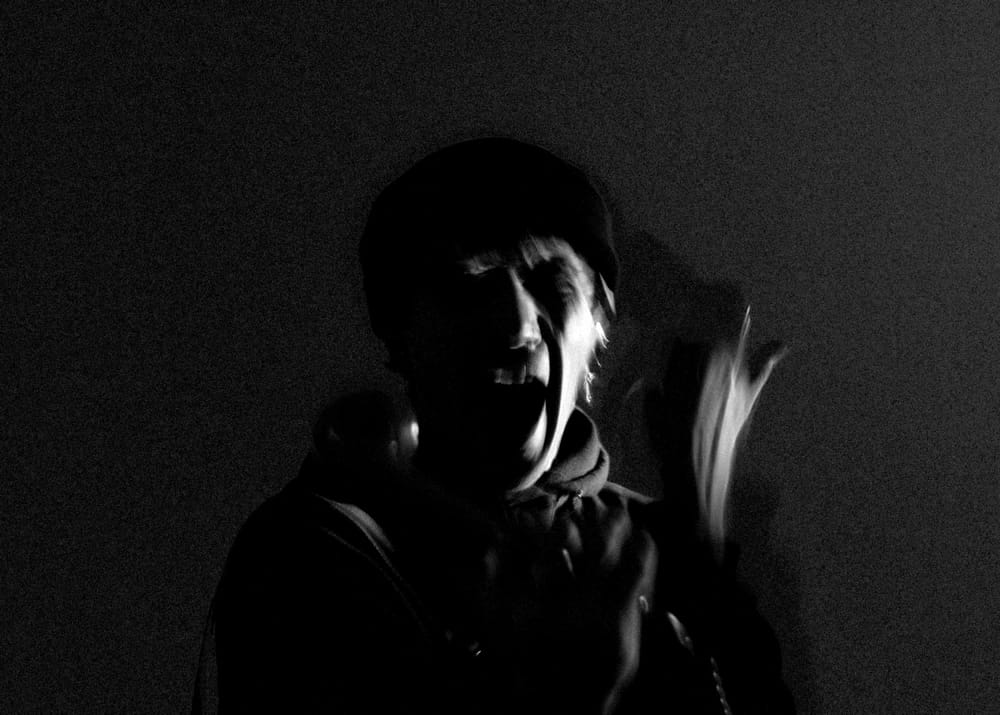
There was a time when adults could feel something without screaming at you about it. We could disagree - hard - in a meeting and walk out with our faces still attached. When bad news arrived at the dinner table, we finished the meal anyway. In hindsight, you could call it discipline: the capacity to feel a thing in full and still choose what to do next.
That capacity is going the way of the Buffalo.
You can see it - in real time - on any platform that rewards reaction; the faster the feedback loop, the worse the regulation. People are unleashing their feelings, unbounded and uninhibited, before they’ve finished having them, which means they aren’t really having them at all. They’re skipping the inner step, where a person sits with a sensation and decides whether or not it deserves to leave the body.
The new orthodoxy says suppressing emotion is harmful; and this might be true, but outside of a therapist’s office, it’s trivial. Suppression and regulation are different animals. Suppression is shoving the feeling into a closet and pretending it isn’t there until it crawls out twenty years later as an autoimmune disease; regulation is letting yourself feel the feeling, in full, while keeping your hands on the wheel of the car.
We’ve collapsed the distinction.
Look at how grown people describe the minor frictions of their lives. A disagreement at work is “harm.” Someone fails to text back within an acceptable window and they say their boundary has been violated. The vocabulary of clinical psychology has been borrowed wholesale and applied to ordinary life, and it's started to function as a permission slip. If every discomfort is trauma, then every reaction is justified, and the work of metabolizing your experience becomes either optional or the domain of the "privileged."
This is downstream of a cultural shift, confusing authenticity with reactivity. The assumption is that whatever you feel first, raw and unmediated, is the real you, and anything else is a performance.
In my experience, the opposite is closer to the truth.
The real self is the part of you who survives the first reaction; the part that can be angry and still be kind, scared and still steady.
The reactive self is a child throwing food; and calling the food-throwing “brave” is a mistake.
Actual children, watching this, are absorbing the model with terrifying efficiency, growing up in homes where the adults live stream their anger and stage public meltdowns in airport terminals. The lesson they’ll enact is that feelings are emergencies, and emergencies require an audience. Walk into any third-grade classroom now and you’ll find children who can name fourteen emotions and have the tools and know-how to regulate approximately none of them.
Some of this is technological. Phones reward a specific kind of nervous system, twitching first and thinking later. The dopamine architecture that hooks you on slot machines hooks you on outrage, and the platforms have figured out that a regulated person is a bad customer. The regulated close the app, but the dysregulated person scroll until four in the morning, bleeding cortisol and efficiently monetized.
But blaming the phone lets too many people off the hook. Phones inherited the tantrum and scaled it; the rot is deeper and philosophical. Several decades of therapeutic culture, well-meaning and badly executed, have taught generations that the goal of inner life is to express and never to contain. Containment has been rebranded as toxic, and composure as being cold.
For all my critiques of the philosophy’s Reddit-bound adherents, the Stoics weren’t automatons; Marcus Aurelius wept for his son, and Epictetus had been a slave whose owner crippled him for sport. They knew exactly how much the world hurt, and they wrote about it unapologetically. Their “innovation” was the claim that our hurt is not the last word. Between stimulus and response there exists a space, and in that space a person with agency can choose, and be responsible for that choice. A human being, however battered, retains a small and sovereign workshop where they make and remake and rebuild and mend themselves. That workshop is the only piece of territory that can’t be confiscated by circumstance - lose access to it and you lose yourself.
A good many people now are locked out of their own workshops. They feel a thing and the thing feels them right back, and there’s no daylight between the two.
The art of emotional regulation is dying because the conditions that taught it have been removed. We’ve lost slow time and private time; we’ve lost the time when no one asked what you thought before you’d finished thinking it. A whole generation of children has watched the adults around them treat every passing affect as a press release, and they’re learning to do the same. But you can’t regulate what you’ve already broadcast - and you can’t reclaim a workshop you’ve turned into a stage.
Westenberg is designed, built and funded by Studio Self.
We make tech legible.